google search

Saturday, January 26, 2013

Vastenburg Fortress in Solo Indonesia


Vastenburg Fortress


Vastenburg Fortress

Vastenburg Fortress is a relic of the colonial Dutch fort in the city of Solo, Indonesia. Vastenburg fort stands in the span of years 1774-1779. First, the fort was named De Grootmoedigheid. The building was established by the Governor-General Gustaf Willem van Imhoff. Later the fort was changed to become bigger and stronger in 1775.
 
Vastenburg Fortress crucial one hub city of Solo and Semarang. At that time the city of Solo is the trade center and is characterized by the development of the colonial city. But nevertheless feel the power of the Kingdom of Surakarta tradisionalistik still felt.
 
Vastenburg Fortress in Solo City, Indonesia, became part of Solo identity with a fixed historical preservation. Many historical lesson behind the fort by the Dutch (1745) which can be a lesson for future generations.
Judging from historical values ​​Vastenburg Fortress, apparently not willing to see the fort was removed from the memory and history of the nation. Some relics of the colonial Dutch fort (even from a more ancient era) in another city into an asset and museum.

Fortress historical values ​​Vastenburg


In terms of urban morphology context, this castle has an important role in the city of Solo in XVIII-XIX period. Solo City is the center of commerce and the development of the colonial city. In terms of the context of the colonial era, other artifacts related to the existence of which is Vastenburg Fortress Church of St. 

Anthony, a former Bank Javasche buildings, post offices, highways straight shaft Solo-Semarang, European settlement, and Societet Harmony. All the colonial era artifacts is located just a few hundred yards from where Solo Palace.

Vastenburg fort is a place of Dutch troops to "oversee" Kraton Surakarta since government Pakubowono III. Typology colonial city synonymous suspected the existence of a fortress. Netherlands make up the city since the kingdom Kartasura. At that time, the king's affairs in indigenous territory come to the attention of the Netherlands, for example, security, commerce, housing, urban planning and policy (stelsel).

The building is surrounded by a fortress Vastenburg brick wall with a height of about 6 feet with a bearing wall construction is also surrounded by a wide moat with a drawbridge protection liaison. While the buildings in the fort criss-crossed to the soldiers and their families live. At some point around there are residential buildings of the officers.
 
In the context of the history of the struggle for Indonesian independence, the fort was recorded in many of the fighters Indonesia (native) had been imprisoned, tortured, and murdered in the Dutch colonial era. This continued in the days of the Japanese occupation when the fort was occupied Bala Dai Nippon Army.
 
Dutch troop strength is centered in Fort Vastenburg during his reign over the nation of Indonesia. Inside the fort there Vastenburg an underground bunker that is wide enough, the bunker is to imprison the detainees were captured (the indigenous people).
In addition to the city of Solo, you can also find a dungeon, like Fort Pendem Cilacap in the city and Fort Malborough dungeon in Bengkulu.
 

As Heritage


Author got the information from various sources, the fort has a vast 31,533 m² is considered as one of the cultural heritage in the city of Solo. Vastenburg fort has a very strategic location in Solo, Citadel is also used as the tourism icon for the Solo.

Vastenburg fortress located in the city of Solo, not far from the Town Hall building, Bank Indonesia, Pasar Gede, Kraton Surakarta and buildings - the other building. In addition to residential plots in which Dutch soldiers are building barracks as military activities. While in the midst - the middle there is a large field for preparation and military training facilities.

Since independence, Fort Vastenburg "inherited" by the elements of our nation were holding a gun, which the military. In the independence era fort was never functioned as a military barracks, a military compound or hostel for 6 Infantry Brigade, Trisakti Baladaya and Kostrad.

Read more ...
Saturday, January 5, 2013

Solo is Batik city


Batik in Solo city

Batik bulk
people are batik
people are batik


Batik is the art of drawing on fabric that has high artistic value and has become part of the culture of Indonesia (especially Java). Batik art is applied to the fabric and make garments. Initially drawing on fabric art is only the culture of the royal family, the result for the king and the family clothing.
 
The art of batik in Indonesia has been known since the time of Majapahit kingdom and continued to grow until the next kings.
 

History of batik in Java


History of batik in Java is closely related to the cultural development of the Majapahit kingdom, until the entry of the spread of Islam in Java in the kingdom of Mataram kingdom until the time of Surakarta and Yogyakarta
 
Batik relationship with the spread of Islam prevalent in areas in Java batik centers are areas Batik students and later became a tool of economic struggle by the leaders of Muslim traders against the Dutch economy at that time about the beginning of the century - XIX.
 
At the time of Majapahit, batik has become a culture in the kingdom Majapahit, can be traced in the Mojokerto and Tulung Agung. That is an area that is closely related to the Majapahit kingdom. At that time, led by a Adipati Kalang who do not submit to the Majapahit kingdom, the area was known as Bonorowo (wetlands) are now known as the Tulung Agung.
 
As time goes on batik art imitated by the people nearest and subsequently expanded into the work for women to spend leisure time. Furthermore, batik clothes that used only the royal family, then became a commoner clothes are very popular, both women and men. White fabric that is used when it is the result of homespun.
 
Although batik is known since the time of Majapahit, but the development of batik spread rapidly in areas of Central Java, particularly Surakarta and Yogyakarta. It is seen the development of batik in Mojokerto and more influenced Tulung Agung next General Solo and Yogyakarta batik patterns.

 Batik Solo


Solo is one of the cities in Java, with its Javanese culture is very strong, to the city of Solo slogan "Solo The Spirit of Java". As a cultural center, the city of Solo always keep and preserve Javanese culture has become embedded with its image as a cultural city.
 
Many Kampung Batik, in the Solo area as a tourist shopping batik Among other things, Kampung Batik Tourism Kauman, Kampung Batik Laweyan and many other places such as batik shop Klewer Market, 
Central Wholesale Solo and so on.
 
Batik has become one of the city's flagship product and also the Icon Solo Solo. Typical Solo batik is known throughout Indonesia and even export products.
Batik Solo is famous for its traditional style and patterns of batik both "write" and the batik process "cap".
 
The materials that are used as a dye batik still using domestic materials such as Java Soga. Batik pattern remained similar to the first, among others known as "Sidomukti" and "Sidoluruh".
 

Differences Write Batik and Stamp Batik


 Write Batik

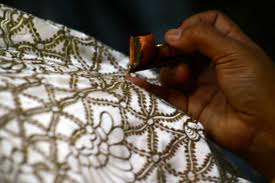
Write of batik


Batik process of the process using a tool called a "Canthing". These devices are usually made of copper which is formed in such a way as to accommodate the "malam" (wax-like substance to create an image of batik)

The process of the creation / drawing on batik can not be repeated, so the image will look natural and blend with the size and outline. Motive can be smaller when compared with batik.

Batik images can be seen on both sides of the fabric look more flat (see-through back and forth) specifically for the delicate batik. Basic color fabrics are usually younger than the color of the scratches motif .

Making batik can not be exactly the same, because the process is manual and takes a relatively longer time compared with the process of making batik.
Each piece of the picture that will never be repeated the same shape and size. Unlike the printed batik is likely to be exactly the same between the images with other images.

Batik-making process takes approximately 3 to 6 months for batik work, and therefore the selling price batik relatively more expensive compared to batik, batik and also looks more unique and second to none.

 Stamp Batik


Stamp of batik

Batik is done by using a cap (an instrument made of copper formed according to the desired picture or motif). Form of drawings / designs on batik there is always a clear repetition, so images appear over and over with the same shape, the size of the line is relatively higher motive than batik. On both sides of the fabric will not be seen through.

At each stroke motives usually look younger, than the base color fabric. Because the process does not require a closure cap batik on fabric base, thereby reducing the complexity of the time of manufacture, making it possible to pursue the production process faster and cheaper selling price.

The selling price is relatively cheaper batik than batik, because usually numerous and have in common with one another so unique .... these things can be learned .....
Read more ...
Tuesday, January 1, 2013

Wayang kulit purwa in solo city


Shadow puppets prototype in solo

Puppet show


Shadow puppets prototype is a traditional art in Java, a picture of humanity, which is made from animal skins (prototype) played by a person who called Mastermind. This puppet show usually requires a screen (color), coupled with gending / gamelan rhythms, tinged dialogue (antawacana), presents the play and pitutur / instructions in the philosophy of human life. Then the audience from behind the scenes to see the shadow of the puppet, so called wayang (shadow).
 
This puppet art was inspired from the story of the Mahabharata and Ramayana, originated in India. But there are also leather puppet prototype with a quotation from the story in Buddhism, as the story relates to the ceremony Ruwatan (sanctification of human beings). Leather puppet prototype usually takes overnight.
Wayang story on the island of Java and Bali has been recognized by UNESCO on November 7, 2003, as the work of an amazing culture in the field of narrative story and legacy are very valuable (Masterpiece of Oral and Intangible Heritage of Humanity).

History of puppetry


Puppet prototype has been played a few hundred years ago, which functions as a puppet arise ancestor spirit worship ceremony. So a special ceremony in his memory of the ancestors. At that time puppet forms are very simple but the emphasis is not the form of wayang shadow puppet.
Puppet developments in Java

The times are changing, the development of wayang in Java also undergone many changes, from the shape wayang began to change, for example, the form of puppet eyes like the eyes of the human form. Developments puppets began to change rapidly in the era of the trustees, including Sunan Kalijaga,  Sunan Bonang and others joined the puppet shape change so that it becomes more beautiful shape, even the story began to change little by little.

Emigration from Kartasura Kasunanan palace to the village of Solo (Surakarta) also brought progress in the art of puppetry.
 
Step improvement in the time of Sultan Agung Hanyakrakusuma, age Pajang kingdom, thekingdom of Surakarta, a lot of time perfecting Pakubuwono puppet forms that create shape now as it is today.
Even in this modern day form of wayang already diverse, with a variety of stories created by puppeteer or puppet players.
 
Shape variation of the puppet into a variety including a puppet Marionette Puppet dolls made of wood.
 
Artists from China who were also sometimes staged Solo Chinese puppet show called Wayang Potehi. With stories from China as well as the typical chinese musical accompaniment.
 
Wayang Klitik puppets are kind of a character made of wood, the story is taken from the end of the Majapahit Chronicle (Dhamarwulan story).
 
Used sometimes "Wong Solo" utilizing his free time making puppets out of grass, called Wayang Rumput.
 
Wayang Beber shape is a sheet of fabric painted and typically ranges story about Kediri Palace, Ngurawan, Singasari (Panji story).
 
Puppet prototype is part of some sort that exists, including gedog puppets, puppets middle, revelation puppet, puppet wahono, stunning puppets, Puppet torches, Papak puppets and much more.

The meaning for the Javanese wayang


To date, the Java has a variety of traditional art that can touch the hearts of people, including the art of puppetry. Puppet for Java is symbolic of everyday life and the Javanese worldview about life. Besides puppet is also a tool of communication / social relationships Java community.
 
Especially shadow puppet prototype often associated with traditional ceremonies, including marriage procession, congratulations birth of a baby, moving house, circumcision, and usually presented in the stories that make sense of the procession is a celebration, such as the celebration of the marriage usually takes the story "Parto Krama "(marriage Arjuna), a celebration of the birth of showing Abhimanyu birth stories and much more.
 
In essence the art of puppetry contains concepts that can be used as guidelines lives in attitudes and actions in this world. In the puppet as if Java is not just dealing with general theories about human beings, but human behavior is described concretely
 
The concept is structured to be an implicit cultural values ​​and depicted in puppet story line, both in the nature of life, the origin and purpose of life, the human relationship with God, man's relationship with other human beings.

Components in leather puppet prototype


In the leather puppet prototype, there are several components to support the incomplete dominant puppet, among others:

  • Dalang (who plays shadow puppet)
  • Puppet
  • Gamelan (set of musical instruments used to accompany shadow puppet performance). Usually there are two grip gamelan, the slendro and slendro.
  • Gamelan Gong consists of, Kendang, Xylophone, flute, fiddle, Sharon and many others.
  • Niyaga  (people who play gamelan / music). The musicians are usually dressed in traditional Javanese.
  • Sinden (the singer who sang the song or the piece-the piece of Java on a leather puppet).
  • Fabric (white cloth that is used as a display in a puppet show prototype).
  • Light (as light puppet show).

These are some of the components for the creation of leather puppet prototype.

Puppet show


If you are vacationing in Java, Indonesia, take some time to see puppet show prototype, usually played in an art gallery Radio Republik Indonesia (RRI). Ordinary puppet show begins at 8 pm until the wee hours (at 4 am). I am sure you will be blown away, many tourists or students from other countries learn to play the puppet, singing the song to a puppet show and much more from the lessons related to puppet culture in the city of Solo.
Read more ...